



As India enters 2026, its economy continues to demonstrate remarkable resilience amid a complex global landscape. The latest advance estimates from the National Statistical Office project real GDP growth at 7.4% for FY 2025-26, up from 6.5% in the previous fiscal year.  This robust performance, driven by buoyant services and manufacturing sectors, positions India as one of the fastest-growing major economies. Nominal GDP is expected to expand by 8%, reaching ₹357.14 lakh crore.  However, this growth narrative is nuanced, with public infrastructure investment leading the charge while private sector participation remains cautious.
Against the backdrop of U.S. tariff hikes under President Trump, geopolitical tensions, and rising global public debt, India’s policymakers face critical decisions on monetary stance and fiscal consolidation. Widening inequalities further underscore the need for inclusive strategies to sustain this momentum.
Public Infrastructure-Led Growth and Shy Private Investment
India’s growth story in recent years has been predominantly fueled by public capital expenditure on infrastructure, which has cushioned the economy against external shocks. Government spending on roads, railways, and urban development has accelerated, with the FY26 Union Budget allocating ₹11.21 lakh crore for infrastructure—3.1% of GDP.  This infra-led approach has supported a rebound in construction (7% growth estimated for FY26) and allied sectors, contributing to the 7.8% and 8.2% quarterly expansions in June and September 2025.  The National Highways network, for instance, expanded to 1,46,342 km by 2025, bolstering connectivity and economic activity. 
Yet, private investment remains subdued, often described as “shy.” Gross fixed capital formation has shown green shoots but lags behind public efforts. Corporate capex, while recovering, is constrained by global uncertainties and a preference for deleveraging over expansion. Data from the Reserve Bank of India (RBI) indicate that private corporate investment growth slipped to 0.7% of GDP in early 2025, down from 1.3% in FY24-25.  This hesitation stems from uneven demand recovery, particularly in rural areas, and external trade pressures.
Private Corporate firm Financing Patterns and Balance Sheet
Indian corporates have shifted financing strategies, increasingly relying on internal accruals and equity markets amid high borrowing costs. Aggregate net profits soared to ₹7.1 lakh crore in FY25, nearly tripling from FY21 levels, enabling deleveraging.  Debt-to-equity ratios improved across firm sizes, with large firms dropping from 139% to 94% and medium firms from 117% to 85%.  This balance sheet repair has enhanced debt serviceability, with interest coverage ratios averaging 7.7 post-COVID. 
Bank credit trends reflect this deleveraging: non-food bank credit grew 11.4% year-on-year in November 2025, but industrial credit moderated to 9.6% from higher rates earlier.  Firms are prioritizing cash reserves, which rose to ₹14.19 lakh crore by September 2025, up 11.2% annually.  Over 300 companies became debt-free in FY25, signaling a conservative approach to leverage.
Non-performing assets (NPAs) have declined sharply, bolstering financial stability. The gross NPA ratio hit a multi-decade low of 2.1% in September 2025, projected to improve to 1.9% by March 2027.  RBI’s Financial Stability Report highlights resilient banking with capital adequacy at 17.1%, underscoring sector strength. 
Implications for Monetary Policy and Fiscal Deficit
The RBI’s Monetary Policy Committee (MPC) has adopted a hawkish stance amid persistent uncertainties, and later cutting the repo rate by 25 bps to 5.25% in December 2025—the fifth reduction in 2025, totalling 125 bps.  This relatively hawkish moment reflects caution over potential inflation from tariffs and supply disruptions. Though one may expect further room for policy rate cuts with CPI figures in November 2025 with only 0.71 percent, the RBI MPCprojected CPI at 2.0% for FY26. Growth forecasts were revised upward to 7.3%, but the neutral stance signals vigilance.
Fiscal implications are tied to the Union Budget. The FY26 deficit is targeted at 4.4% of GDP, down from 4.8% in FY25, with liabilities at 56.1%.  However, tax shortfalls of ₹1.5-2 trillion due to slower nominal growth may test this, though non-tax revenues (e.g., RBI dividends) provide buffers.  For FY27, the deficit could overshoot to 4.6% amid defense and infra needs, despite a 4.3% target. 
The Trump Tariff Backdrop and Geopolitical risks
External headwinds, including U.S. tariffs under President Trump, are exerting pressure on the rupee, while foreign direct investment (FDI) shows promise of acceleration. Trump’s tariffs, escalating to 50% on Indian goods (potentially 500% for Russian oil buyers), pose risks.  India’s exports to the U.S. grew 22% in November 2025, but sectors like textiles and agriculture face headwinds.  Diversification to Africa and ASEAN could offset impacts, with overall exports resilient at 19.37% growth. 
Globally, growth is projected at 2.7% in 2026, down from 2.8% in 2025, amid tariffs and fragmentation.  Public debt exceeds 100% of GDP by 2029, straining finances.  Geopolitical risks, including U.S.-China tensions and Middle East conflicts, amplify uncertainty. 
Persisting Challenges: Widening Inequalities
Despite growth, inequality persists. India’s Gini coefficient is 25.5, but top 1% capture 23% of income—highest in a century according to research by the World Inequality Lab.  Wealth inequality grew, with top 10% holding 58% of income.  Rural-urban divides and jobless growth exacerbate this, demanding targeted policies.
In conclusion, India’s 7.4% growth offers optimism, but sustaining it requires balancing fiscal prudence with inclusive reforms. Enhancing private investment, addressing inequalities, and navigating global risks will be key. As policymakers prepare the FY27 Budget, a focus on equitable, sustainable growth could solidify India’s position in a turbulent world.
(This article first appeared in the Money Control dated January 9, 2026)
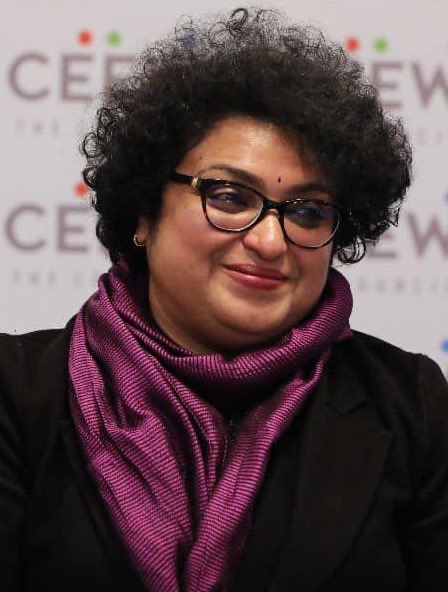
Lekha Chakraborty is Professor, NIPFP and Research Associate of Levy Economics Institute of Bard College, New York and Member, Governing Board of International Institute of Public Finance (IIPF) Munich.
The views expressed in the post are those of the authors only. No responsibility for them should be attributed to NIPFP.